Computer model reveals how enlarged ventricles damage the brain in hydrocephalus
A biomechanical model of the ageing brain shows that the ventricle enlargement seen in idiopathic normal pressure hydrocephalus produces mechanical strain large enough to explain the white-matter damage seen in patients.
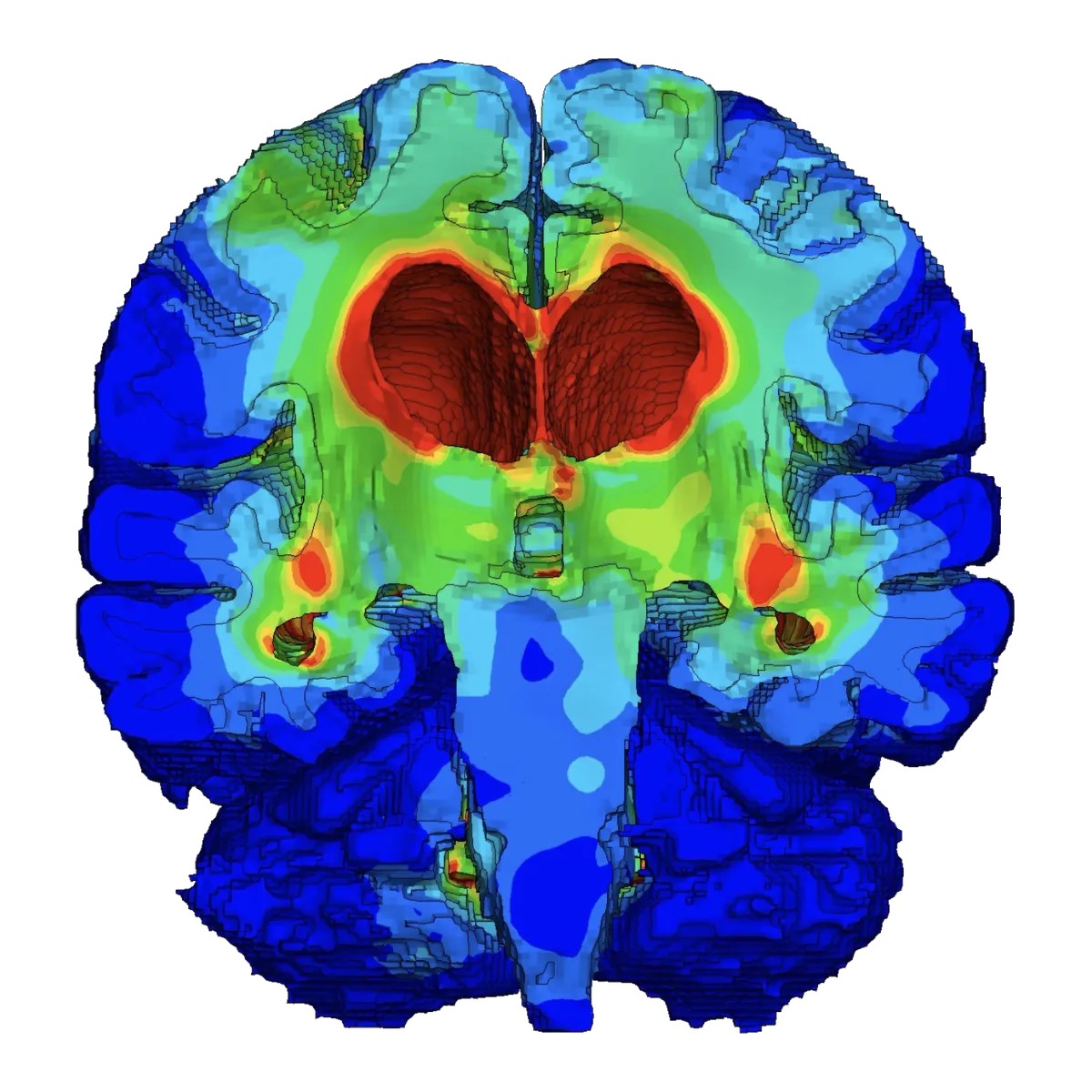
Idiopathic normal pressure hydrocephalus (iNPH) is a growing neurological disorder in older adults, recognised radiologically by enlarged brain ventricles — but it has remained unknown whether that enlargement actually damages brain tissue mechanically, or is just a marker of something else going wrong. Published in Smart Medicine, the lab’s latest paper provides strong evidence that it’s the former.
The team built an anatomically detailed biomechanical model of the ageing human brain and applied patient-derived ventricular enlargement to it, using 3D displacement fields from MRI scans of iNPH patients and age-matched controls. The model reproduced the radiological markers used to diagnose iNPH, including the Evans index, callosal angle and high-convexity sulcal narrowing, and predicted large mechanical strains in periventricular white matter — particularly the corona radiata, corpus callosum and anterior thalamic radiations, tracts consistently implicated in iNPH imaging abnormalities.
The model forms the foundation of a future “digital twin” to support diagnosis, patient stratification, and treatment planning — including whether shunting surgery, which drains fluid and reduces ventricle size, could reverse some of that mechanical strain.