HEAD Lab · Imperial College London
Understanding how mechanical loading injures the brain, and how to prevent it.
The brain experiences mechanical loading during road traffic and sports collisions, falls, some diseases, and surgical interventions. We work across computational modelling, impact testing, protective design, sensing, and machine learning to understand the load-injury relationship and use it to predict and prevent brain injury.
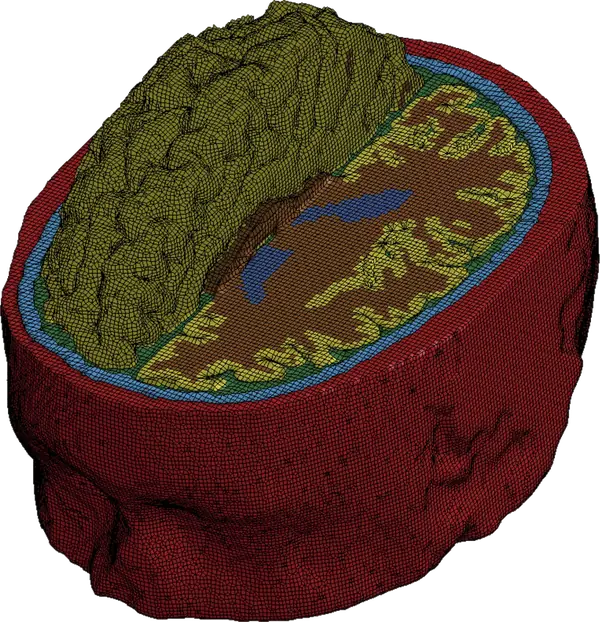
Research
How does mechanical loading injure the brain?
How can we use this understanding to predict and prevent brain injuries?
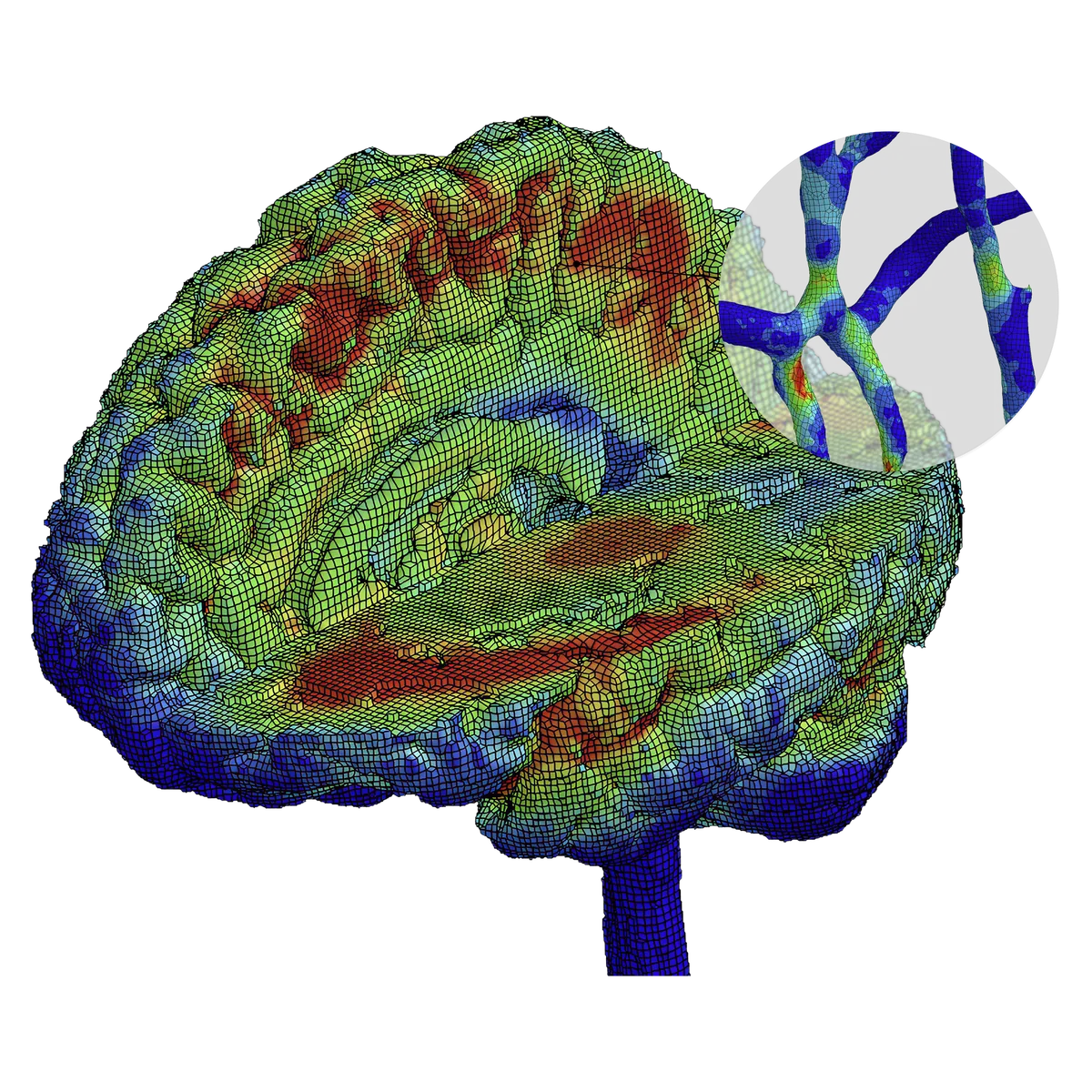
Computation
Brain Modelling
High-fidelity computational models of brain biomechanics, used to predict the effects of mechanical loading on brain tissue.
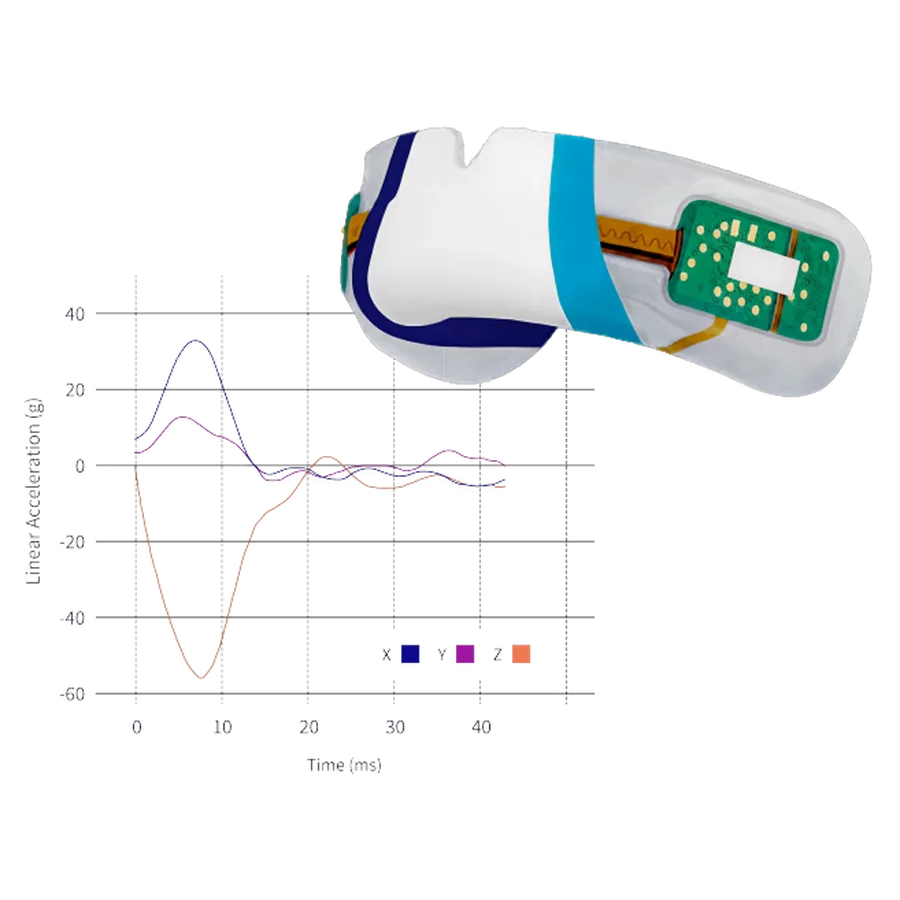
Sensing
Brain Exposure Monitoring
Technologies for estimating mechanical forces applied to the head and brain in sport, road traffic, and falls.
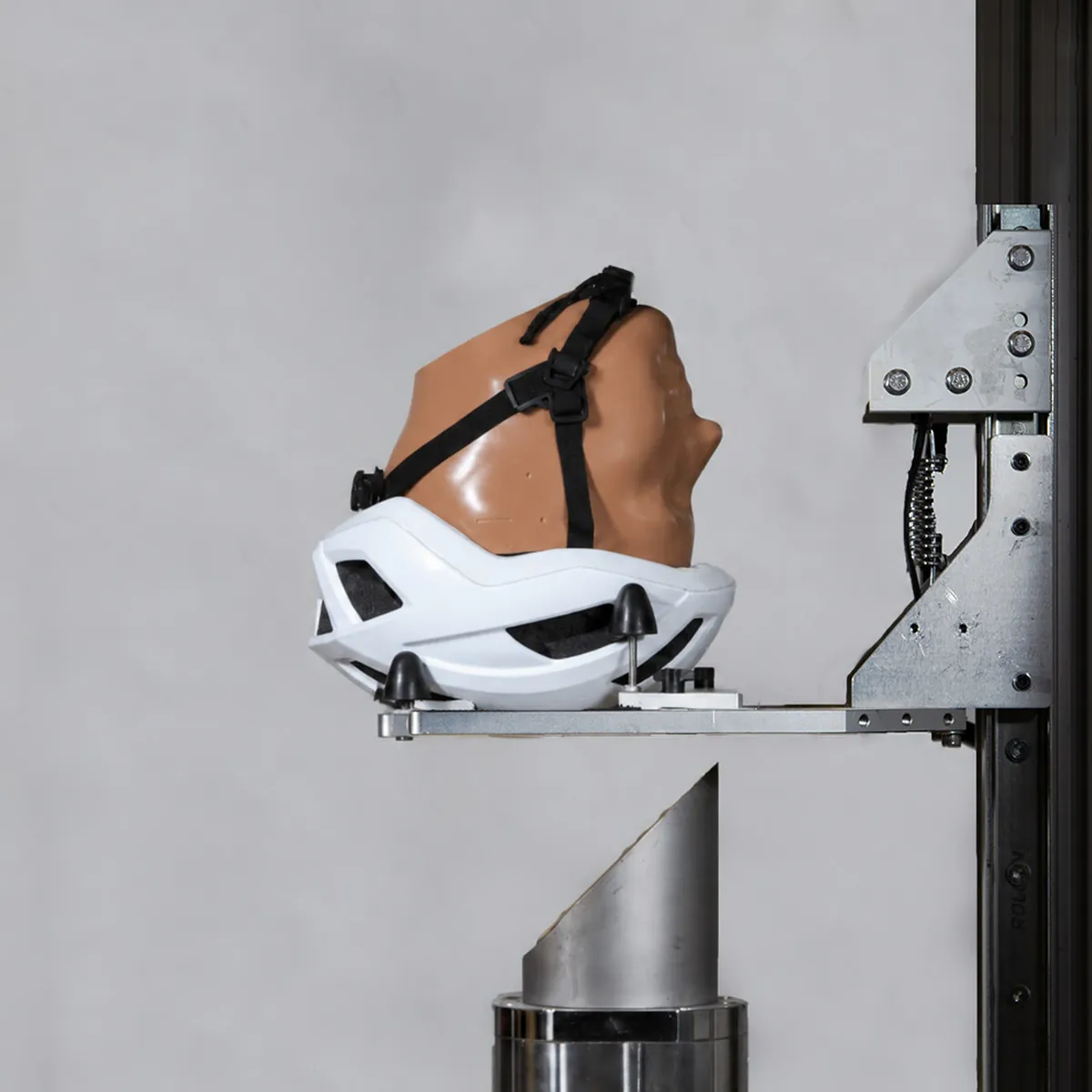
Protection
Testing Protection Systems
Helmet test methods that reflect real-world impacts and predict risk of different brain injury types.
Impact
Read more- 80,000+
- Views of the HIPER public cycle-helmet rating in its first two months.
- EN17950
- We helped to develop a new European standard of headforms, the first of its kind in the world for measuring biofidelic head rotation.
- 3 nations
- Our e-scooter head-injury research is cited in road-safety policy in Norway, Sweden, and the UK.
- World Rugby
- Our brain-biomechanics modelling has informed return-to-play guidelines.
Funders
Our work is made possible by funding and support from partners across industry, research councils and charities.
- Autoliv Research
- EPSRC
- Imperial College London
- Innovate UK
- Mips
- MRC
- Road Safety Trust
- Royal Academy of Engineering
- Royal British Legion Centre for Injury Studies
- Royal Society
- Sony Depth Sensing
- Sports and Wellbeing Analytics
- TBI-REPORTER
- Transport Research Laboratory
- Wellcome Trust
News
Latest from the lab.
HEAD Lab at IRCOBI 2026, Munich
Nine papers from the lab at this year's IRCOBI at LMU Munich — Emily, Elena, Claire, Will, Lucas, Vahid and Xiancheng presenting on individualised brain strain, mandibular muscle forces, post-collision injury prediction, collapsible helmets, motorcycle facial impacts and more.
Mazdak Ghajari promoted to Professor of Brain Biomechanics
Nineteen years after arriving in the UK for his PhD, Mazdak has been promoted to Professor of Brain Biomechanics at Imperial College London.
Face the facts: are motorcycle helmets protecting the right places?
New study in Traffic Safety Research, led by Claire Baker, on where riders' heads are actually struck in crashes — and how often the face is involved.
From LinkedIn