Collapsible bicycle helmets provide less protection, on average, than conventional designs
The first study to compare the two helmet types found collapsible helmets carry a higher average predicted injury risk and more weight than conventional helmets, in work led by Will Dawber and published in Accident Analysis & Prevention.
Imperial researchers have published the first study to compare collapsible (foldable) bicycle helmets with conventional ones, finding that collapsible helmets offer lower average protection against serious head injuries. Led by Dr Will Dawber, the team tested 30 helmets — 24 conventional and all six collapsible models sold in the UK — at four impact locations.
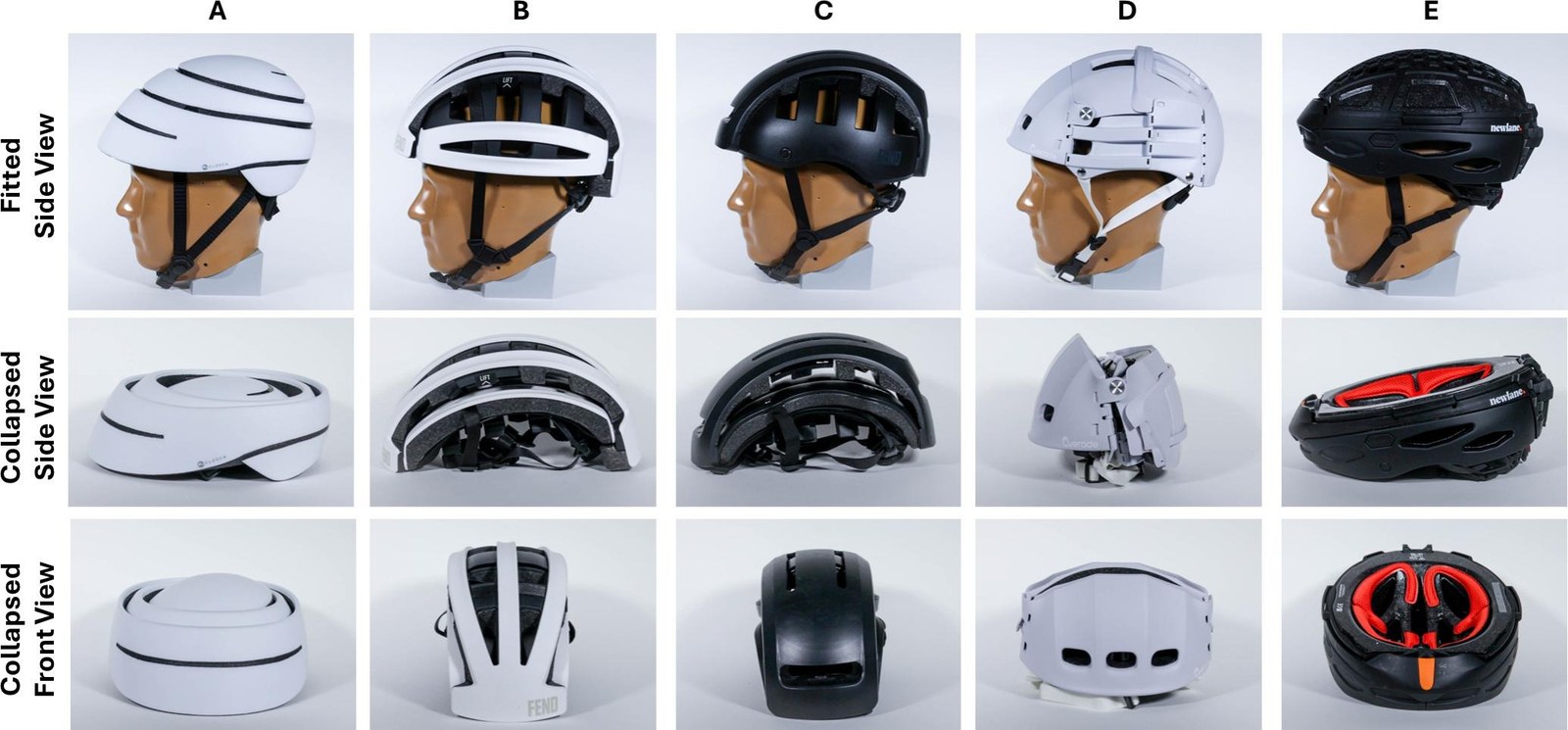
Average predicted linear injury risk was 24% for collapsible helmets versus 20% for conventional ones, with no difference found for rotational injury protection. Collapsible helmets also averaged more weight (461g vs 294g), which was linked to higher injury risk, and rotational-protection technology such as MIPS was far less common among them (1 of 6, versus 12 of 24 conventional helmets) — a collapsible model with MIPS ranked 2nd of 30 overall, while the same model without it ranked 26th. All of the helmets tested met minimum UK and European safety standards.
The study, published in Accident Analysis & Prevention, was funded by The Road Safety Trust, which also supports HEAD Lab’s HIPER helmet rating system.